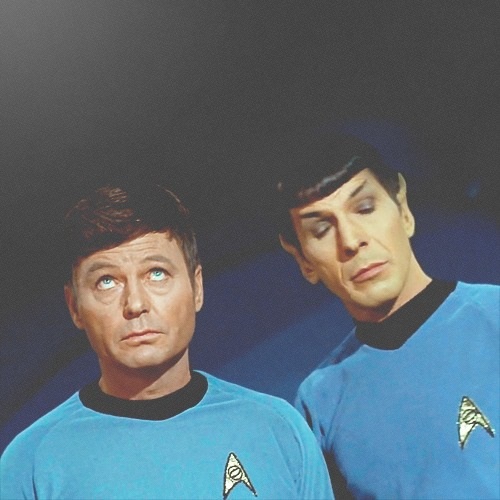
Star Trek TOS turns 60 in the United States today.
Here’s my perspective on the occasion:
It changed my life!
I wasn’t a science fiction fan until Star Trek debuted in 1966.
I wasn’t much of a sci fi fan afterward, either, but did dive into a few authors that floated my boat during the time: Theodore Sturgeon (A Saucer of Loneliness), Isaac Asimov (I, Robot), James Blish (author of the earliest Star Trek novelizations), Clifford D. Simak (The Best of Clifford Simak), and others.
I tried getting into TNG, ENTERPRISE, VOYAGER
…and DEEP SPACE NINE, but abandoned these quests after viewing several early episodes and coming up less than compelled to continue.
I didn’t need to sample TOS for several episodes
…to fall head over heels for it. The characters simply compelled me into their lives and adventures. There had been nothing like TOS before to compare it to*, and nothing has taken its place in my affections since (in the science fiction niche).
*One exception: The Twilight Zone (1959-1964)
Star Trek TOS was Revolutionary
It featured an alien (Mr. Spock), a Black communications officer on the bridge (Lieutenant Uhura), a Japanese helmsman (Lieutenant Sulu), and later, a Russian (Lieutenant Pavel Chekov), a Horatio Hornblower-type leader (Captain Kirk), a charming chief engineer Montgomery Scott, and a curmudgeonly and captivating Everyman physician (ultimately my favorite character, Dr. Leonard “Bones” McCoy, portrayed by DeForest Kelley, who had previously been typecast as a psychopathic cowboy or ne’er-do-well in countless TV episodes and motion pictures).
These casting choices were revolutionary at the time
Star Trek debuted in 1966, just twenty years after World War II and right smack in the middle of the Civil Rights movement. Some of the actors (James Doohan and DeForest Kelley) and the executive producer Gene Roddenberry had been in the military during that conflict, Doohan in Canada and Roddenberry and Kelley in the U.S.
The military was segregated, blacks serving the country in black regiments, whites in white.
Roddenberry and Kelley were brought up in the segregated South. (Paul Winfield, who played Captain Terrell in one of the TREK TOS motion pictures, reported that DeForest Kelley was the only Southerner he knew personally without a racist bone in his body.)
But during WW II, among their avowed “enemies” was Japan. Russian joined US forces in June 1941 after Nazi Germany broke its non-aggression pact and invaded the Soviet Union (Operation Barbaross). But not long after, as we all know, the two nations went their separate ways, with animosity in excess for the other, a reality that continues to this day.
Now look again at the people on the bridge of the USS Enterprise!
Black. Russian. Japanese. Scottish. US citizen. Green-blooded extraterrestrial. All working together in a grand adventure to seek out additional diversity throughout the known universe (Infinite Diversity in Infinite Combinations).
The Civil Rights Act had passed Congress just two years before…
…creating a huge chasm between progressive, inclusive people and those who liked things to stay just the ways they always had been.
And The Equal Rights Amendment never has been ratified
(As late as April 27, 2023, a procedural vote to advance a resolution removing the ratification deadline fell short of the 60 votes needed to overcome a filibuster. Previously, the House of Representatives passed a similar deadline-removal resolution on February 13, 2020.)
The Voting Rights Act Has Been Gutted Recently, too.
So Pete “Kegsbreath” can deny long overdue promotions to well-qualified Black and female service members because it’s currently legal to prefer and to promote white men over all others.
When Nichelle Nichols (Lt Uhura) told Dr. Martin Luther King Jr.
…that she would be leaving the series because she felt her character was given throwaway lines and scenes and was therefore negligible, he insisted that she stay on, telling her, in essence, “Your character is a crucial member of the Enterprise crew. You must not leave.”
Remember, up until this time, Black women
…were portrayed on TV and in films as background servants, housekeepers, caregivers, or other marginalized folks. Uhura was usually background, too, but she was there on the bridge of the enterprise with crucial responsibilities that everyone depended on for their very survival. She didn’t need any greater role to matter mightily to the people on that starship! That was Dr. King’s take on the matter.
So Nichelle stayed. And the rest is history.
Later on, Whoopie Goldberg was able to share with Nichols that her presence on the ship gave her, as a little girl, the dream that she pursued for the rest of her life: to become more than a shadowy, background being. Many other Black women told her the same. Barack Obama was a big Star Trek TOS fan.
For me…
…as a transgender “alien” (before I had the term to identify who I am), Star Trek TOS gave me an intellectual “alien” to emulate (so I wouldn’t allow my anxiety and colliding emotions overwhelm and undermine my evolution), and a “father figure” (in Dr. McCoy) who was equal parts sternness and sensitivity, a man whose chief occupation when not saving lives was to help others (even half-human Spock) embrace their uniquely quirky individual human-ness as imperfectly as he did himself.
DeForest Kelley Considered Dr. McCoy to be “The Viewer’s Perspective”
..the “fish out of water”, someone thrust on a unique experience without his obvious consent!
Whenever McCoy encountered a new creature — from Nancy the Salt Eater in The Man Trap to the horta — he brought us viewers along to view them from our own eyes in real time.
To McCoy, new beings were undoubtedly encountered as unknown entities — not immediately deemed hostile or fearsome, and certainly worth a second look (from a relatively safe distance). He was surprised and intrigued, but not knee-jerky about it. He kept his head and his heart with him.
That’s perhaps the best aspect of undamaged people of goodwill.
Star Trek TOS gave us a positive look at what the future can hold when we all drop our swords and start looking forward together.
But Star Trek TOS’s Influence Doesn’t End There with Me
My connection to Star Trek will always be, first and foremost, the insane reality that I became friends with DeForest Kelley and his wife Carolyn. They launched my writing career in 1969 and were with me (even when I didn’t realize it) from that day on. It took me twenty years to reconnect with them, but when I did, what happened could not have been expected — and certainly wasn’t by me!
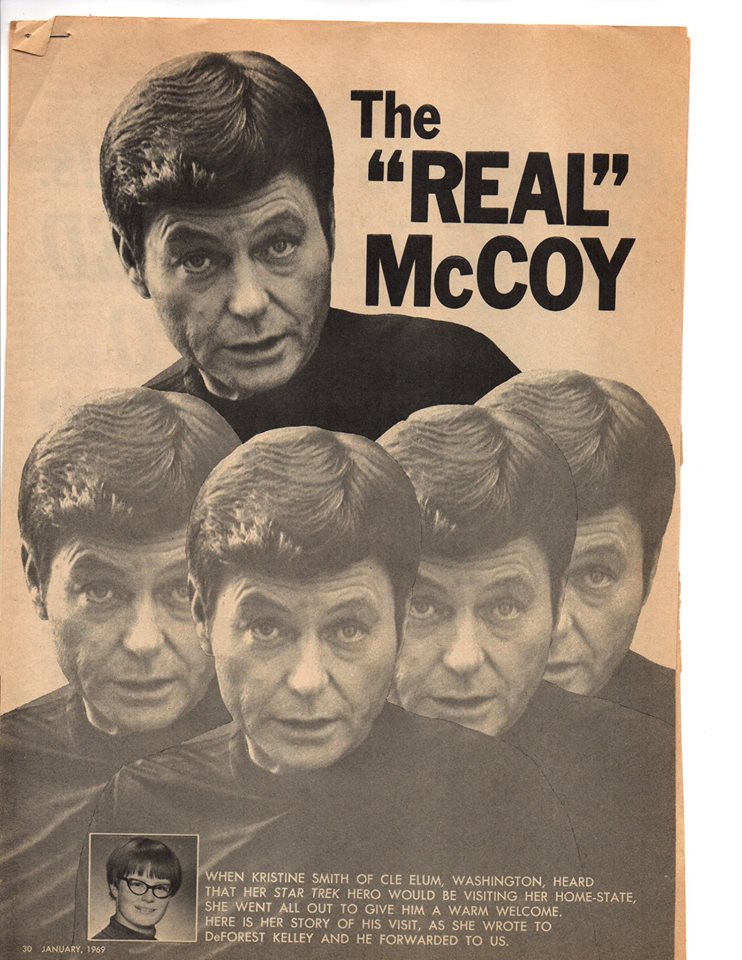

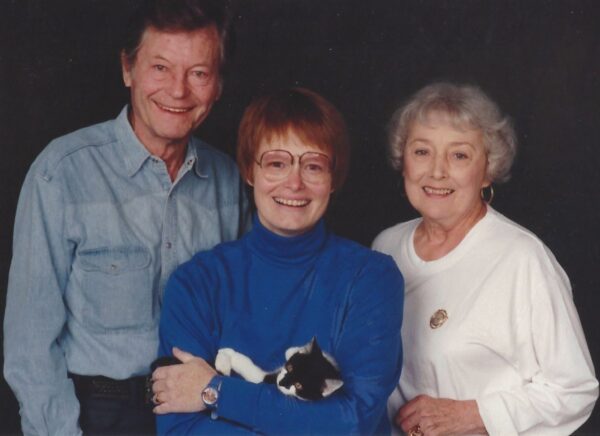
If you don’t already know the details, you can catch up here:
Star Trek TOS changed my life forever.
It probably changed yours, too, in some way.
Today’s the day to acknowledge it!
HAPPY ANNIVERSARY, STAR TREK TOS!