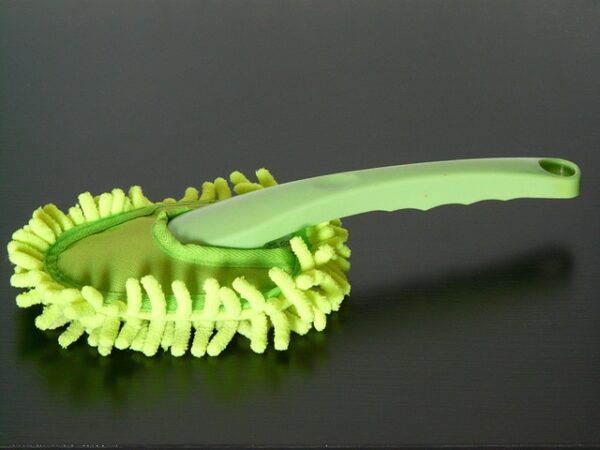
Yesterday I made the startling discovery that there is no dust here in El Cajon Costa Rica.
No dirt, either.
I mean, in my casita.
Of course there is dirt everywhere or this sanctuary wouldn’t be surrounded with a score of different species (probably more) of flora!
But because I’m renting and want to keep this place looking as nice as it did when I arrived, and because small ants will make their way inside if there are any food or liquid particles they can get to and carry off to their outdoor nests, I am doing all I can to keep this place clean. This includes washing my few cups, glasses and dishes every time I use them without allowing them to accumulate in the sink and carrying the wet garbage to the main road every day or so to put it out of opportunity’s way.
So yesterday I decided it was time for “deeper cleaning.” You know, dusting shelves, tables, and other areas that accumulate dust over the course of a few weeks.
I COULDN’T FIND ANY DUST!!!
Futhermore, I realized several days ago that the tennis shoes I bought just before leaving the US and have been wearing ever since still look nearly new. I must have walked fifty miles in them by now and the upper part of them still looks all but brand new! Usually by now in the life cycle of my tennis shoes, they’d look grungy and like I’d been walking in goat pastures and chicken runs because — well, I had been doing that every day!
I’m living in the countryside, but on a hill and all of the stuff that gets washed down from the hill above me during thunderstorms keeps washing down another 150 feet or so below me through pipes or trenches. There are few very places here where I can get my shoes muddy. The second the driveway ends, floral life takes over and springs up all around me.
I had to pinch myself again. “Am I dreaming?!” No mud? No dust? It’s amazing!!!
SWEEPING THE FLOOR
Sweeping the floor every day or so begets such a minute, picayune amount of cat litter, errant rice particles, and other detritus that it’s hardly worth doing. But I do it anyway because I know the ants will let themselves in if I don’t. Every food item I buy is either put into the fridge or in airtight plastic containers or sacks so the ants don’t have any reason to come in. I want them thinking, “This hooman is impossible. Don’t he ever eat, fer cricket’s sake?!!!” (I realize that ants probably have far more erudite conversations among themselves than this one, but this is my blog, dammit, and I get to mangle their language at my leisure, because it’s fun! Sorry, ants!)
MY SPANISH LESSONS CONTINUE
Every night I dive back into the above tome and study some more. What I realized last night is that this same book seemed so much more mysterious (although extremely friendly to people who have studied Spanish in the far distant past) and foreboding than it does now. I recognize a good 85% to 95% of the verbs now, which is huge since verbs activate sentences. And the past, present and future tenses (plus present perfect, past participle, etc.) are much more familiar to me now. So, studying it now seems more like a review than a lesson, even though I first cracked it open more than five months ago.
I HIGHLY encourage English speakers who want to learn Spanish to get MADRIGAL’S MAGIC KEY TO SPANISH. The first part of it reveals how many Spanish verbs mirror English verbs, and mean the same thing. There are a few verbs that don’t mean the same, but the vast majority do.
So, from the get go in this book, the reader can follow along and easily understand what is being said. The trick is to master the pronumciation at this point, because a,e,i,o and u are pronounced in one very specific way in Spanish and they aren’t in English.
The a in Spanish is pronounced like the a in father.
The e in Spanish is prounced like the e in Edward.
The i in Spanish is pronounced like the “ee” in cheese.
The o in Spanish is pronounced like the “o” in “oh.”
The u in Spanish is pronounced like the “oo” in hoot.
So my first name sounds like “crease” in Spanish.
Madison is pronounced “mod-ee-sown”.
Lisa is pronounced Lisa! (Lucky Lisa!)
El actor es famoso (L acTORE s fa-mos-o) The actor is famous.
Me llamo Kris (May-yah-moe Crease) “I am called Kris.”
Mi nombre Kris (ME gnome-bray s Crease) My name is Kris.
Que es su nombre? (K s sue gnome-bray?) What is your name?
And sentence structure varies from English structure in a number of ways.
For example/por ejemplo, “the pretty house” is “la casa bonita” in Spanish with the modifying description (pretty) following the noun.
There are other examples, but this isn’t intended to become a Spanish lesson. You have MADRIGAL’S libre excelente for that! I can’t recommend any Spanish primer more highly than this one, and I’ve read at least eight other Spanish language books, so there’s experience behind this recommendation!